Magnetic Hotplate Stirrers — Expert Comparison & Buying Guide 2025
Temperature control, stirring precision, safety and durability: compare the top 5 models (IKA, Heidolph, VELP, Thermo Scientific, Scilogex) and choose confidently.
Request a quoteWhy hotplate stirrers matter
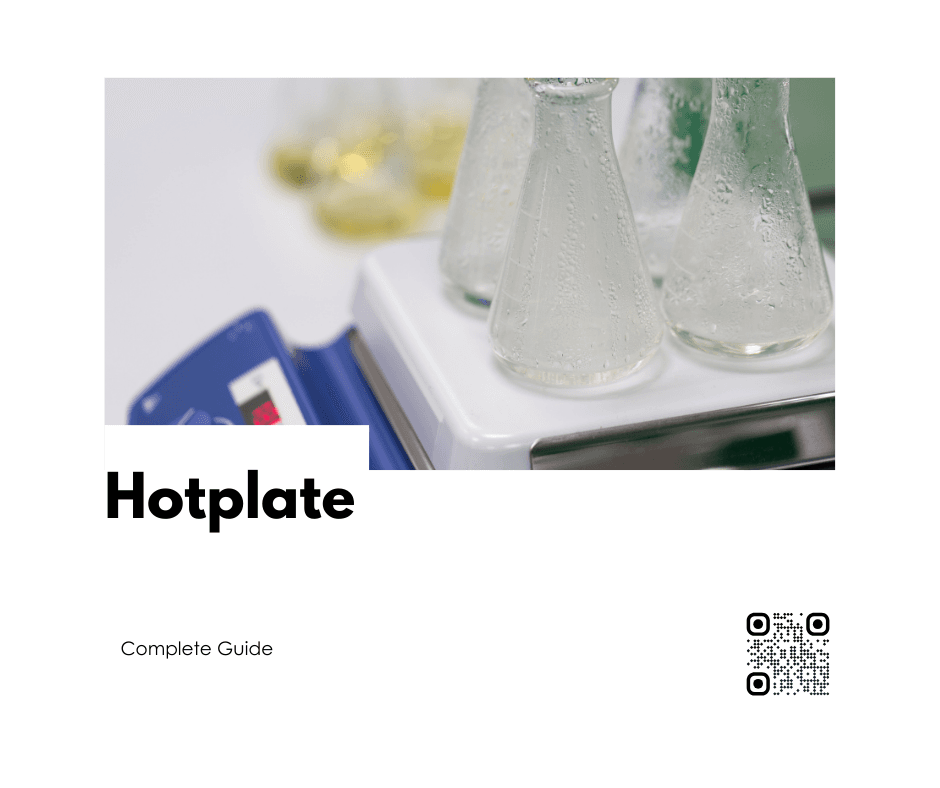
Hotplate stirrers combine magnetic stirring (bar magnet driven by a rotating magnetic field) and controlled heating. They are everyday workhorses across academia, pharma, QC and industry.
- •
Dissolving powders and salts
- •
Reactions under temperature control
- •
Culture media preparation
- •
Gentle solvent evaporation
- •
Long-run homogenization of suspensions
1. Key technical criteria (practical impact)
Plate temperature range
Typical ranges: From ~30–550 °C depending on model and plate material.
Application impact: Determines whether you can run simple dissolutions or high-temperature reactions and faster evaporation.
Solution thermoregulation
External probe control: Pt100 or Pt1000 probes with PID loop regulate the actual SOLUTION temperature instead of plate surface.
Accuracy: ±1–2 °C with probe is common; critical for GMP/QA reproducibility.
Stirring speed & torque
Speed range: Typically 30/50–1500/1700 rpm. Look for torque compensation to avoid bar decoupling in viscous media.
Volume capability: High torque helps maintain stirring up to the stated 10–20 L (water) ratings.
Plate material
Ceramic: Excellent chemical resistance, fast heat-up, but more brittle to shocks.
Aluminum / CerAlTop™: Superior heat uniformity and robustness; CerAlTop™ adds chemical resistance.
Safety features
HOT TOP / HOT indicator: Warns above ~50 °C even when the unit is off.
Over-temperature circuits: Independent safety cut-offs and error codes protect users and samples.
Interface & ergonomics
Digital controls: 1 °C setpoints, timers, reverse mode, speed hold.
Connectivity: Cloud/remote (e.g., VELP Ermes) for monitoring and traceability.
Durability & service
Ingress protection: IP32–IP42 typical; higher IP is better near hoods/splash risks.
Service & parts: Availability of probes, rods, clamps, spare plates extends lifetime and lowers TCO.
2. Top 5 models in 2025
| Model | Plate (material/size) | Max temperature | Speed (rpm) | Max volume (H₂O) | Heating power | External probe | IP | Highlights |
|---|---|---|---|---|---|---|---|---|
IKA RCT basic | Aluminum Ø135 mm | RT–310 °C | 50–1500 rpm | 20 L | 600 W | Pt1000 (included) | IP42 | Adjustable safety 50–360 °C, HOT TOP, digital display |
Heidolph MR Hei-Standard | Kera-Disk® (silumin+ceramic) Ø145 mm | 20–300 °C (plate), 250 °C solution | 100–1400 rpm | 20 L | 800 W | Pt1000 (option) | IP32 | Analog interface, industrial reliability |
VELP AREX-6 Digital / PRO / Connect PRO | CerAlTop™ Ø135 mm | RT–370 °C | 30–1700 rpm | 20 L | 630 W | Pt100 / VTF | IP42 | Timer, auto-reverse, SpeedServo™ torque hold; Connect PRO adds Wi-Fi/Ermes Cloud |
Thermo Scientific Cimarec+ (7" / 10") | Ceramic or Aluminum (7"/10") | 30–540 °C (ceramic), 30–300 °C (aluminum) | 50–1500 rpm | Up to ~6 L (size-dependent) | — | Pt100 / Pt1000 (option) | — | HOT TOP ≥50 °C; with probe, solution setpoint range ~30–250 °C |
Scilogex MS-H-ProT | Stainless steel with ceramic coat Ø135 mm | RT–340 °C | 100–1500 rpm | 20 L | 500–550 W | Pt1000 | IP42 | LCD, timer (1 min–99 h 59), HOT ≥50 °C, RS-232 |
3. Pros / Cons by brand
Pros
Proven workhorse across academia/industry
20 L capacity, IP42, Pt1000 included
Cons
Plate temperature lower than high-end ceramic units
Single plate size (Ø135 mm)
Best suited if…
You need a robust, widely supported standard with external probe included.
Watch-outs
For >310 °C plate needs, consider ceramic plates (e.g., Cimarec+).
Pros
Industrial build, consistent torque at 20 L
Kera-Disk® plate combines robustness and chemical resistance
Cons
Analog controls (no timer/reverse)
IP32 is lower than IP42 units
Best suited if…
Reliability and endurance matter more than digital features.
Watch-outs
If you need tight solution logging/automation, prefer digital models.
Pros
Timer and auto-reverse boost homogenization
SpeedServo™ helps maintain speed under load
Ermes Cloud (Connect PRO) for remote monitoring
Cons
Plate max 370 °C (below ceramic 500+ °C class)
Cloud option adds cost
Best suited if…
You need precise solution control, productivity features and traceability.
Watch-outs
For extreme plate temperatures, ceramic 500+ °C units are better suited.
Pros
High ceramic plate temperatures up to ~540 °C
HOT TOP and detailed thermal behavior documentation
Cons
Max volume depends on size; less than 20 L class
With external probe, setpoint range is limited (≈30–250 °C)
Best suited if…
You run high-temperature tasks or need fast evaporation.
Watch-outs
Confirm actual solution control with a probe for accuracy.
Pros
Great performance/price with LCD and timer
20 L rating and Pt1000 external probe capability
Cons
Lower max plate temperature (340 °C)
Brand availability varies by region
Best suited if…
You want dependable day-to-day performance on a budget.
Watch-outs
For aggressive solvents, confirm plate compatibility and cleaning protocols.
4. Recommendations by profile & use
5. Buying guide — checklist
6. Technical FAQs
Ceramic offers excellent chemical resistance and fast heat-up but is more brittle.
Aluminum provides superior heat uniformity and mechanical robustness; CerAlTop™ adds chemical resistance.
Because solution temperature can be significantly lower than plate surface.
External probes regulate the actual medium with better accuracy for GMP/QA.
Yes for low-viscosity media (water) and favorable geometry.
For viscous or heterogeneous samples, consider larger stir bars or an overhead stirrer.
Ingress protection against dust and splashes; IP42 resists angled drips better than IP32.
Prefer higher IP near hoods and wet benches.
Yes with ceramic plates on specific models (e.g., up to ~540 °C).
Always validate the probe/consigne limits when an external probe is connected.
7. Executive summary & tools
Use an external probe to control the solution — not just the plate.
Match plate material to chemistry: ceramic/CerAlTop™ vs aluminum.
Torque matters: choose speed hold/compensation for higher volumes/viscosity.
Safety first: HOT TOP, independent over-temp, proper IP, error handling.
For GMP/QA, favor digital control, timers, reverse and cloud logging.
Conclusion — Act now
Choosing the right hotplate stirrer directly affects accuracy, reproducibility and operator safety. Combine suitable plate material, external probe control and safety functions to secure results.
Use this comparison to shortlist models and request structured quotes (references + probes + accessories + certificates).